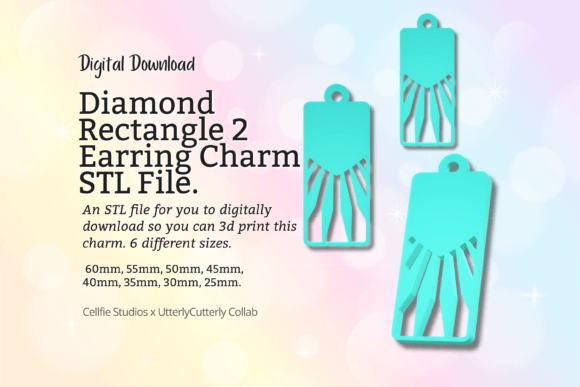
Rectangle Diamond Earring Charm STL File
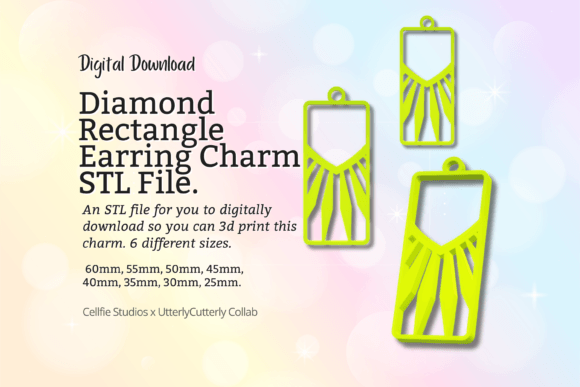
When you are looking to expand your 3D printing portfolio, especially in the realm of jewelry and resin casting, precision and versatility are paramount. The Rectangle Diamond Earring Charm STL File offers a sophisticated blend of modern geometry and vintage elegance, designed specifically for creators who want to produce high-quality physical items from digital blueprints. This is not merely a single design; it is a comprehensive pack containing eight distinct sizes, ranging from delicate 25mm charms suitable for earrings to substantial 60mm pieces ideal for wall hangings or statement ornaments. Understanding how to leverage this file correctly can mean the difference between a frustrated print and a stunning, marketable product.
Understanding the Versatility of the Design
The core appeal of this STL file lies in its adaptability. Unlike many specialized models that serve only one purpose, this rectangle diamond shape acts as a versatile canvas. Whether you are an entrepreneur looking to sell handmade resin jewelry on platforms like Etsy, or a hobbyist wanting to create unique gifts for loved ones, this file provides the structural integrity needed for various applications. The design features clean lines and geometric facets that catch light beautifully, making it particularly effective when filled with resin.
However, the term "charm" can sometimes be misleading if taken literally without context. While it is perfectly sized for earring posts or keyring attachments, the inclusion of multiple scales means you should view this as a modular system. A 30mm piece might serve as a pendant in a necklace, while the 60mm version could anchor a larger decorative arrangement. Recognizing these potential uses early on helps in planning your material usage and printer settings more effectively.
Common Pitfalls in Resin Infills and Printing
One of the most significant challenges users face when working with resin-infused 3D prints is understanding how different materials interact with liquid resins. A frequent mistake is assuming all filaments behave identically during the curing process. Certain pigments, such as alcohol inks, can be absorbed by specific types of PLA or TPU filaments, leading to discoloration or a cloudy finish that ruins the aesthetic of the final piece. To avoid this, it is crucial to test small samples before committing to a full production run. Using clear or white filament often yields the most predictable results when experimenting with dyes.
Another critical oversight involves the top layers of the print. When creating a cavity for resin infill, the surface tension of the liquid can pull through microscopic gaps if the print is not sufficiently sealed. We strongly recommend increasing the number of top solid layers in your slicer software. This creates a robust barrier that prevents resin leakage and ensures a smooth, glass-like finish on the exterior once cured. Neglecting this step can result in wasted time, wasted resin, and unsellable products.
Structural Integrity and Loop Holes
A detail that often catches new users off guard is the exclusion of loop holes from the provided dimensions. The measurements listed—60mm, 55mm, 50mm, 45mm, 40mm, 35mm, 30mm, and 25mm—refer to the main body of the diamond rectangle. If your project requires a specific attachment point size, such as a standard jump ring for earrings, you must account for the space required for the hole itself. Failing to do so may result in a charm that is slightly too small for your intended hardware or requires post-processing adjustments that could weaken the structure.
To mitigate this, always measure your intended findings against the digital model using CAD software or a physical caliper before printing. This proactive approach saves material and ensures that your final assembly fits together seamlessly. For instance, if you are aiming for a 25mm earring drop, ensure that the remaining space after accounting for the attachment loop still allows for adequate visual balance.
Optimizing Your Workflow for Success
Efficiency in 3D printing comes from preparation. Before downloading and slicing the Rectangle Diamond Earring Charm STL File, take a moment to review the orientation settings. Printing the charm flat, with the largest face down, generally provides the best surface quality for the visible side but may require support structures that need careful removal. Alternatively, printing at an angle can reduce support marks but might affect the dimensional accuracy of the edges. Experimenting with orientation on a low-cost test print can help you determine the best balance between aesthetics and ease of post-processing.
Furthermore, consider the long-term value of having a diverse range of sizes. Having access to eight variations allows you to offer tiered pricing to customers or create cohesive sets. For example, a matching set of earrings and a necklace can be produced using the smaller and medium sizes, respectively, while the larger sizes can be marketed as standalone art pieces. This variety enhances the perceived value of your offerings and caters to a broader audience.
What to Check Before You Print
- File Integrity: Ensure the STL files are not corrupted. Open them in your slicer software to verify that there are no non-manifold edges or inverted normals.
- Filament Choice: Select a filament compatible with your resin type. White PLA is often preferred for its opacity and ease of dyeing, while PETG offers greater durability.
- Slicer Settings: Adjust wall thickness and top layers according to the specific size of the charm. Smaller charms may require finer layer heights for detail retention.
- Hardware Compatibility: Verify that your chosen findings fit within the designated space, remembering that loop holes are not included in the stated dimensions.
By approaching the Rectangle Diamond Earring Charm STL File with these considerations in mind, you position yourself for success. This digital download is a powerful tool for both personal creativity and commercial enterprise. It empowers you to transform simple plastic into elegant, functional art. Remember, the quality of your final product is directly linked to the care you take in the preparation and printing phases. Avoid common errors, respect the material properties, and plan your designs thoroughly. With the right mindset and technical precautions, you can produce stunning resin-filled charms that stand out in any collection or marketplace.
As you explore further, keep in mind that our store regularly updates its library with new STL files. Staying informed about new releases can provide fresh inspiration and keep your product line dynamic. Whether you are refining your current techniques or starting your journey into 3D printed jewelry, the Rectangle Diamond Earring Charm STL File serves as an excellent foundation for building a reputable and creative brand.