Christmas Gingerbread Vase Pot STL File: A Comprehensive Evaluation
The Christmas Gingerbread Vase Pot STL File represents a specific category of digital assets designed for additive manufacturing. It is a downloadable 3D model file that allows users to fabricate physical decorative items using a 3D printer. Unlike traditional retail products, this offering provides the geometric blueprint rather than the finished object. The design features a festive gingerbread aesthetic, suitable for holiday decor, and is optimized for home printing environments. This evaluation explores the technical specifications, practical applications, and decision-making factors associated with acquiring and utilizing this digital download.
Understanding the Product Offering
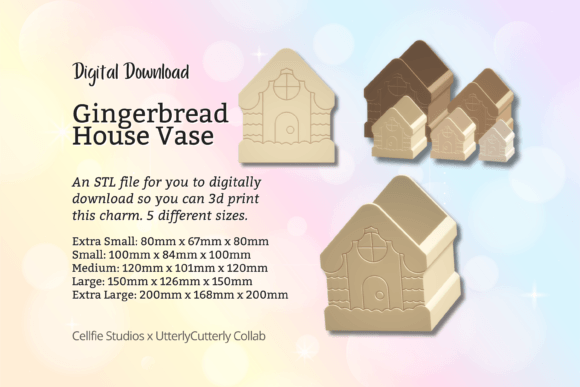
At its core, the Christmas Gingerbread Vase Pot STL File is a vector-based 3D model intended for slicing software. Upon purchase, the user receives immediate access to download the file, which can then be processed by a slicer program like Cura or PrusaSlicer before being sent to a 3D printer. The product description highlights a pack containing five distinct size variations, ranging from an Extra Small dimension of 80mm x 67mm x 80mm to an Extra Large scale of 200mm x 168mm x 200mm. This variety allows the buyer to select a scale appropriate for their specific display space or functional requirement.
The file is marketed as a versatile tool for various creative endeavors. It is not merely a static vase but a base structure that can be adapted. The design is explicitly noted for its suitability in resin infills, allowing users to cast the printed shell in epoxy or similar materials to add texture, color, or structural integrity. Furthermore, the geometry is engineered for ease of printing, aiming to minimize support structures and reduce print failures for users of varying skill levels.
Strategic Applications and Use Cases
Individuals interested in this STL file typically fall into several distinct categories, each with unique motivations for acquisition. Understanding these use cases helps clarify whether the product aligns with one's goals.
- Home Decor Enthusiasts: For those who enjoy seasonal customization, this file offers a cost-effective way to create unique holiday centerpieces. The ability to choose between five sizes means the item can serve as a small tabletop accent or a large floor-standing display piece.
- DIY Crafters and Makers: The mention of resin compatibility makes this particularly attractive to hobbyists who specialize in casting. By printing a mold or a shell and infilling it with resin, users can achieve a glossy, high-end finish that differs significantly from standard plastic filament prints.
- Small Business Owners: The license to sell physical prints of the design transforms the digital file into a potential revenue stream. Entrepreneurs can produce the vases in bulk, apply custom colors or finishes, and sell them at craft fairs or online marketplaces without needing to design the model themselves.
- Gift Givers: The festive nature of the design makes it a strong candidate for personalized gifts. A printed vase, perhaps filled with dried flowers or ornaments, serves as a thoughtful, handmade present for friends or family during the holiday season.
Technical Considerations and Printing Requirements
Successful production of the Christmas Gingerbread Vase Pot relies heavily on the user's hardware capabilities and software configuration. While the file is described as "easy to print," 3D printing remains a process subject to variables inherent in the machine and environment.
The recommended settings provided by the creator include a 0.4mm nozzle and a print speed of 150 mm/sec. These parameters suggest a balance between detail resolution and throughput. However, users must recognize that these are baseline recommendations. Different printers may require adjustments to temperature, bed adhesion, or layer height to achieve optimal results. The file has undergone a quality-checking system where designs are tested prior to release, yet the final output still depends on the user's calibration.
One critical consideration is the material choice. Standard PLA (Polylactic Acid) is often sufficient for simple decoration, but for the resin infill application mentioned, the printed model must have the correct wall thickness and surface smoothness to accept the liquid resin without leaking or creating air bubbles. Users intending to sell physical copies should factor in the time required for post-processing, such as sanding or painting, which adds value to the final product but increases labor costs.
Evaluating Tradeoffs and Limitations
While the Christmas Gingerbread Vase Pot STL File offers significant flexibility, there are tradeoffs to consider compared to purchasing a pre-made physical vase.
Time Investment: Acquiring the file does not result in an instant product. A single vase, depending on the chosen size and infill process, could take anywhere from two to ten hours to print. For a business owner planning to sell multiple units, this production time must be weighed against the selling price and potential profit margins.
Hardware Dependency: The primary barrier to entry is ownership of a 3D printer. Without this equipment, the digital file holds no immediate utility. Additionally, maintenance of the printer and troubleshooting of print failures (such as warping or stringing) requires a certain level of technical aptitude.
Aesthetic Variability: Filament prints often exhibit layer lines unless specifically smoothed. If the goal is a seamless, porcelain-like appearance, additional finishing work is necessary. The "gingerbread" style implies texture, which may hide layer lines well, but users seeking a perfectly smooth surface should plan for post-processing.
Decision Framework: Is This Right for You?
Determining whether to purchase this specific STL file requires a clear assessment of current needs and resources. The following criteria can guide the decision-making process.
This product is a strong fit if you already own a 3D printer and are looking to expand your inventory with low-overhead, seasonal items. It is also ideal for users who enjoy the experimental aspect of combining 3D printing with resin casting. The availability of five sizes ensures that the design can adapt to different room layouts, making it a versatile addition to a collection.
Conversely, alternatives may be worth considering if you do not have access to a 3D printer. In such cases, purchasing a ready-made ceramic or glass vase might be more economical when factoring in the cost of buying a printer, filament, and electricity. Similarly, if your goal is to sell items immediately without any production delay, sourcing wholesale stock might offer better margins than a home-printed operation.
For those focused on commercial resale, the key advantage lies in the exclusivity and customization options. Since the file is updated weekly with new designs, staying subscribed to the store allows for a continuous refresh of product offerings. However, sellers must ensure they understand the licensing terms regarding commercial use to avoid legal complications.
Conclusion
The Christmas Gingerbread Vase Pot STL File serves as a functional bridge between digital design and physical holiday decor. Its value proposition rests on versatility, offering five size options and compatibility with various finishing techniques like resin infilling. While it requires a 3D printer and a willingness to manage print settings, the reward is a customizable, scalable product suitable for personal enjoyment or commercial sale. By carefully evaluating the time investment and technical requirements against the desired outcome, users can determine if this digital asset effectively supports their creative or business objectives.