Easter Bunny Gnome: A Comprehensive Guide to Choosing the Right 3D Printed Decor
The transition from winter to spring often sparks a desire to refresh home aesthetics with seasonal charm. Among the various decorative trends emerging for this time of year, the Easter Bunny Gnome has gained significant traction among hobbyists and crafters alike. This unique figure combines the whimsical nature of traditional garden gnomes with the festive symbolism of Easter, featuring distinct elements like bunny ears, a tall hat, and intricate floral details. For those looking to incorporate this style into their home or business without relying on mass-produced items, digital fabrication offers a compelling alternative.
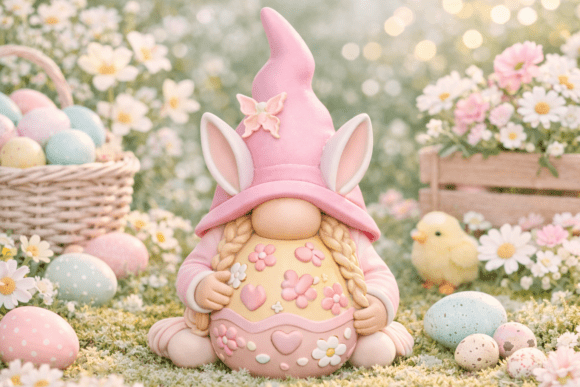
When evaluating options for creating an Easter Bunny Gnome, it is essential to understand what distinguishes this specific design from other seasonal ornaments. Unlike generic bunnies or standard gnomes, this model integrates a cohesive narrative through its sculpted features. The character typically sports braided textures on its beard, a tall, whimsical hat that adds vertical interest, and a decorated egg adorned with heart and flower patterns. These details are not merely aesthetic; they provide the tactile complexity that makes the object suitable for manual painting and detailed display.
Comparing Digital Models to Traditional Manufacturing
One of the primary considerations when acquiring an Easter Bunny Gnome is the method of production. Traditionally, such figures might be sourced from big-box retailers or artisan markets. While these physical items offer immediate gratification, they often lack the customization potential inherent in digital models. Mass-produced decor tends to prioritize uniformity over detail, frequently resulting in simplified shapes that do not capture the nuanced braiding or delicate heart patterns found in high-quality digital sculptures.
In contrast, utilizing a dedicated STL file set allows for a level of control over the final product that factory manufacturing cannot match. By downloading a digital version of the Easter Bunny Gnome, users gain access to two distinct variations: a Slim version and a Fat version. This duality addresses different spatial requirements and aesthetic preferences. The Slim variant may suit narrow shelves or tiered trays where vertical space is limited but width must be minimized. Conversely, the Fat version offers a more robust presence, ideal for central table displays or outdoor settings where stability and volume are prioritized.
Furthermore, the material choice in 3D printing significantly impacts the outcome compared to plastic injection molding. Standard retail items are often made from brittle plastics that can crack under stress. When printing an Easter Bunny Gnome using PLA (Polylactic Acid) or resin, the user controls the density and layer adhesion. This results in a sturdier object capable of withstanding handling during craft fairs or active household environments. The ability to choose between FDM and resin printing also opens up possibilities for surface finish; resin prints can capture the finest braided details, while FDM prints offer a cost-effective solution for larger runs.
Tradeoffs in Design and Printing Technology
While the benefits of digital models are clear, there are tradeoffs to consider regarding the effort required to produce the final item. A purchased figurine arrives ready to place on a shelf. An Easter Bunny Gnome STL file requires a workflow involving slicing software, printer calibration, post-processing, and painting. For beginners, this learning curve can be steep. However, for experienced makers, this process is part of the creative value proposition.
The decision to use a digital model also hinges on the intended application. If the goal is to create a single, one-off gift for a family member, the time investment in printing and painting is often justified by the uniqueness of the result. The model is fully resizable, meaning a small keychain-sized gnome can be scaled up to a large tabletop centerpiece without losing the integrity of the floral and heart patterns. This scalability is a feature rarely available in physical store-bought goods, which are constrained by fixed dimensions and shipping logistics.
Another critical factor is the color strategy. The provided STL files are designed as single-color downloads. This means the base print will be monochromatic. Achieving the vibrant look seen in promotional images requires manual painting or multi-material printing techniques. This stands in contrast to some modern printers that claim to handle full-color output directly. For many creators, however, the "blank canvas" approach is preferable. It allows for personalized color palettes that match specific room decor or brand identities, rather than being forced into a generic manufacturer's color scheme.
Best-Fit Scenarios for the Easter Bunny Gnome Model
Determining whether the Easter Bunny Gnome is the right choice depends heavily on the user's specific goals. This resource is particularly well-suited for individuals participating in handmade markets or craft fairs. The inclusion of both Slim and Fat versions provides inventory variety, allowing sellers to offer options at different price points or sizes. The stable base included in the sculpt ensures that even printed in lower-resolution modes, the figures stand reliably, reducing customer complaints about wobbling or falling over.
For home decorators, the model offers a way to curate a cohesive theme. The combination of bunny ears and a gnome silhouette creates a playful yet sophisticated look that fits the "cozy, whimsical" aesthetic popular in contemporary interior design. The braided details and egg patterns serve as focal points that draw the eye, making them excellent candidates for Easter tiered trays or mantel displays. Because the model is optimized for clean topology, supports can be placed strategically to minimize damage to these delicate areas, ensuring a smooth finish after sanding.
However, there are situations where this option may not be the best fit. If a user requires an immediate solution for an upcoming holiday event, the time required to download, slice, print, and paint the Easter Bunny Gnome might be prohibitive. In such cases, purchasing a pre-made item is the logical choice. Additionally, if the user lacks access to a 3D printer or does not wish to invest in the necessary equipment, the digital file alone serves only as a blueprint that cannot be realized without external resources.
Commercial users should also note the licensing terms. The allowance for selling physical prints makes this an attractive asset for small businesses. Yet, this freedom comes with the responsibility of maintaining quality. Since the model is fully resizable, scaling it too far down might obscure the fine details of the flowers and hearts, while scaling it too high might require support structures that alter the final appearance. Careful testing is required to determine the optimal size for commercial production.
Evaluating Alternatives and Complementary Tools
When exploring alternatives to the Easter Bunny Gnome STL set, consumers might consider other seasonal 3D models, such as generic eggs, baskets, or plain gnomes. While these alternatives offer similar themes, they often lack the integrated character design of the bunny gnome. A plain basket requires additional modeling to add context, whereas the bunny gnome is a complete narrative piece. Similarly, custom modeling services could be hired to create unique designs, but this approach is significantly more expensive and time-consuming than utilizing a pre-sculpted, optimized file.
For those interested in multi-color outputs, the single-color nature of the STL file necessitates a secondary step. Users might explore dual-extrusion printers or multi-material slicer configurations to achieve gradients or specific color blocking. Alternatively, hand-painting remains the most accessible route for achieving high-fidelity results. The choice between these methods depends on the user's budget, technical skill, and desired aesthetic. Hand-painted items often carry a higher perceived value due to the visible human touch, which aligns well with the handmade gifts market.
Ultimately, the Easter Bunny Gnome represents a convergence of digital convenience and analog craftsmanship. It bridges the gap between the limitless possibilities of 3D design and the tangible warmth of seasonal decor. By offering flexible sizing, detailed geometry, and commercial viability, it serves as a versatile tool for creators ranging from casual hobbyists to professional vendors. Whether used to enhance a personal collection or to generate revenue at a spring market, this design provides a solid foundation for celebrating the season with creativity and precision.
As with any project involving digital assets, the success of the final product relies on the user's attention to detail. Proper orientation during printing, appropriate infill settings for stability, and careful post-processing will ensure that the braided textures and floral patterns shine. For those willing to invest the effort, the result is a distinctive piece of decor that captures the spirit of Easter in a way that mass production simply cannot replicate.